
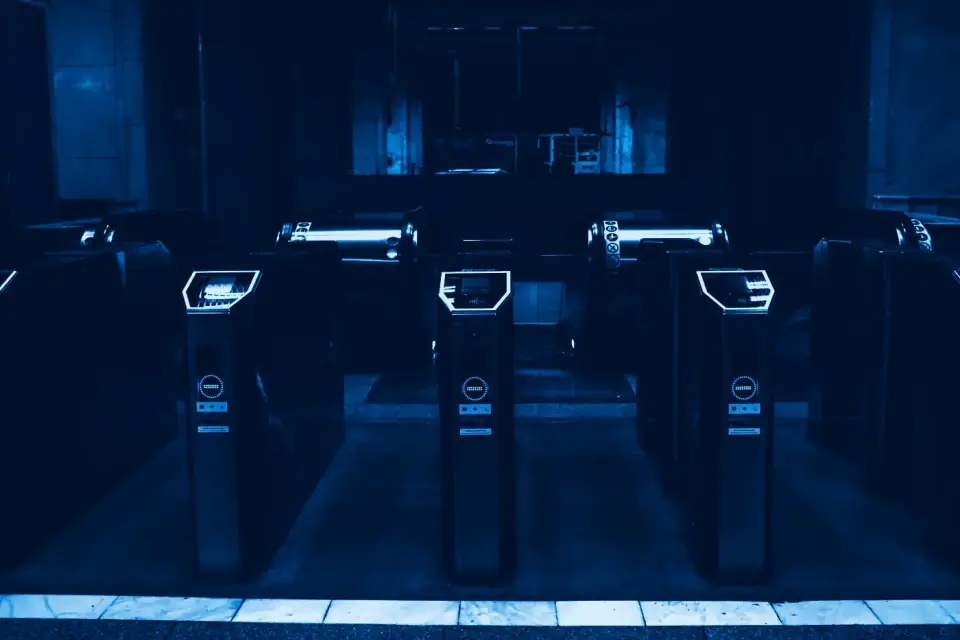
Walk-through detectors for high-traffic entrances.
S4 supplies and integrates walk-through metal detectors and people screening at high-traffic entrances: we choose the detector according to the object to be detected, size the lanes according to throughput and write the screening protocol, to control without choking the entrance.
Request an assessmentContent reviewed in November 2026
- C1Detection
- C2Flow
- C3Configuration
- C4Operation
Who it is for
4 layers, from detection to operation. Choose a profile to see which part of the system concerns you.
Head of security
Effective control without congesting the entrance.
Venue and events manager
Equipment that is installed, calibrated and operated for each event.
Administration of sites open to the public
Orderly entrances and a protocol the staff knows.

Screen everyone without a queue spilling onto the street.
A poorly chosen or calibrated detector causes one of two problems: constant alarms from keys and phones, forcing manual checks on almost everyone, or a sensitivity so low it does not detect what is being looked for.
You need it if you recognize any of these signs:
- Long queues form at peak times or during events.
- The detector sounds for almost everyone.
- There is no written protocol for when the detector is triggered.
- The detector sits next to metal structures or equipment that interfere with it.
How the system is built.
The detector can work alone or integrated with access control turnstiles, so only authorized people pass, and with video surveillance, to record the image of each alarm. Placement is studied to avoid interference from metal structures, motors or nearby cabling.
Detection
- Multi-zone walk-through detectors
- Handheld detectors
- Inspection tables and trays
Flow
- Lanes sized for the peak hour
- Turnstiles or controlled passages
- Pass counters
Configuration
- Sensitivity programs
- Alarm and count logging
Operation
- Secondary screening protocol
- Training of screening staff
- Integration with access and video
What is included and what is not.
Included in the service
- Analysis of the object to be detected and of the level of control required
- Calculation of lanes according to peak-hour flow
- Selection of the detector and handheld detectors
- Interference-free placement, installation and calibration
- Secondary screening protocol
- Training of screening staff
Out of scope
- Security staff who operate the checkpoint
- X-ray baggage inspection, unless expressly agreed
- Entrance modification works
Anything out of scope is coordinated with the right party or quoted separately, and is always stated in writing before we start.
How we do it, step by step.
-
Assessment
Measurement of actual flow, identification of the objects to be detected and review of the space and its interference sources.
DeliverableFlow and detection requirements report
-
Design
Lanes, model and sensitivity program, space layout and screening protocol.
DeliverableTechnical report and layout plan
-
Integration
Installation, leveling and calibration of the detector; integration with turnstiles and cameras if applicable.
DeliverableEquipment installed and calibrated
-
Commissioning
Tests with test objects, on-site fine tuning and staff training.
DeliverableCalibration report and approved protocol
-
Operation and improvement
Periodic calibration checks, maintenance and support during high-attendance events.
DeliverableVerification log
Reference regulations and standards.
These are the usual references for this type of system. The technical report of each project identifies which ones apply, depending on the use, size and location of the installation.
Regulatory reference, indicative
- NIJ Standard-0601
- U.S. National Institute of Justice standard for walk-through metal detectors; common reference in manufacturer datasheets.
- Law 1581 of 2012 and Decree 1377 of 2013 (Colombian data protection)
- If the checkpoint records images or data of people, notice and a data-handling policy apply.
- RETIE
- Colombian technical regulation for electrical installations: governs the service connections and circuits that power the equipment.
What stays in your hands.
Flow report
Measured throughput and requirements.
Layout plan
Lanes, detectors and screening area.
Calibration report
Sensitivity program and tests.
Screening protocol
What to do when the detector is triggered.
How we apply it in your sector.
Works better alongside these services.
What people ask us most.
Where are walk-through detectors used?
At entrances where metal objects must be controlled: corporate buildings, sites open to the public, events and facilities with people screening.
What sensitivity should it have?
The one that matches the object to be detected and the site's protocol; it is defined in the design and fine-tuned at commissioning.
How many people can pass through a detector?
It depends more on the screening protocol and on what people are asked to leave in the tray than on the detector. That is why we measure actual flow and size the lanes for the peak hour.
What happens when the detector is triggered?
The protocol applies: secondary screening with a handheld detector in a defined area, without stopping the other lanes.
Are they suitable for temporary events?
Yes. Portable detectors exist that are set up and calibrated for each event.
Let's talk about your project.
Request an assessmentOr call us: +57 314 460 0683 · +34 848 88 04 04